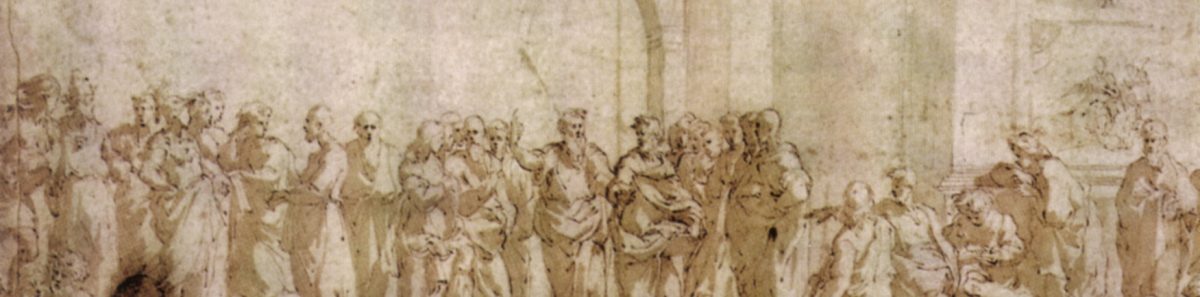

There’s something incredibly powerful in a still image. A picture may be worth a thousand words, but the right photograph can tell you a whole story. And the narrative and emotional importance of the photograph has not diminished with the advent of newer media. In our age of instant access and diversified media, the world can still be stopped by the image of a stunned and bloodied child in the back of an ambulance, and when television brought the war to America from Vietnam in the 60s and 70s, the still image of a roadside execution, or a naked child screaming terror remained. In the infancy of motion picture, during the First World War, it is again photography that retained the most arresting imagery. In this essay I will outline the various uses of photography along the Western Front during the First World War. It will deal with aerial photography, official photography, both for propaganda and posterity, journalistic photography, and personal photography, and will use all of these elements to examine the often conflicting ideas of representing truth and reality both for the contemporary public, and for posterity. For this I will be mostly focusing on sources from the British forces and newspapers, as the majority of primary and secondary sources available in English deal with them.
Great strides had been made in the photography of warfare between the pioneering work of Roger Fenton during the Crimean War in the 1850s and the First World War. Technological advances meant that the photographers of the war could use handheld and portable cameras, as well as pre-prepared negative plates. This meant that photographers were less limited in rigidity and the places they could go.[1] These photographs could be sent rapidly from the Front to the offices of newspapers or the War Office through the use of wireless telegraphy, and would often be used in papers the very next day. Photography became a very important tool in the propaganda machine, to present the struggle at the front to those at home, as a way of maintaining support for the war effort. As Dr. Martyn Jolly notes:
‘The photograph was able to operate along both the axes of publicity and record keeping, propaganda and history. Photographs took part in the urgency of the moment, while simultaneously implying the importance of that moment for posterity.’[2]
In order to house these items the Imperial War Museum was established in 1917, and its curators began collecting material and photographs from the various fronts for the sake of posterity. War Museums were started in nearly all belligerent countries, as the significance of the conflict was recognised, and photographs, as well as other materials, which were sometimes called ‘relics’ by some of the more enthusiastic searchers,[3] showing a reverence and terminology that were normally reserved for the divine, were central features in such museums. This secular veneration of photographs as an unblemished and unbiased source of truth was widespread, and in many ways opposed to the cynicism and scepticism of the modern age, where the doctoring or mislabelling of images is both widespread and widely noted.

THE BATTLE OF PASSCHENDAELE, JULY-NOVEMBER 1917 © IWM (E(AUS) 844)
Photographic material was created and collected in an incredibly haphazard way in the early years of the war, and the British the War Office and Press Bureau did not begin to get to grips with how to use photography effectively as a propaganda tool until 1916.[4] The number of British photographers at the front slowly grew as the war went on, which is why the enduring images of the War in Anglophone popular memory and culture are of the mud and wet of Passchendaele, and not of the earlier, sunnier, battles of Mons or Loos. Throughout the war there were no more than a dozen official photographers for the British and Imperial forces, however, between them they created a vast body of work. Most of them were professional photojournalists before the war working for various illustrated newspapers; Frank Hurley, one of the Australian photographers, being an exception, having earned a degree of fame before the war as an adventurer, having served as the photographer of both the Mawson and Shackleton Antarctic expeditions. These photographers were commissioned and given the rank and pay of an officer, either lieutenant or captain, depending on which force they were attached to. Germany and France also set up photographic wings during the war, the French in 1915, and the Germans in 1916, with Kaiser Wilhelm being a prominent supporter of photography, having already authorised 14 official court photographers to accompany the German army invading Belgium.[5] Both nations invested much more in their photographic and film wings than the British, with mobile darkrooms and a central organisation,[6] as opposed to the more individual and intuitive way the Brits handled their photographers.

THE GERMAN WITHDRAWAL TO THE HINDENBURG LINE, MARCH-APRIL 1917 © IWM (Q 5100)
The inherent problems of taking photographs of combat were perceived very early on in fact, one of the few known examples of men going over the top that was not staged, or taken at a training exercise was by John Warwick Brooke (Fig. 1), taken in 1917. The image taken from a low angle, at the back of the sap, and what is going on around battle field is entirely unclear. Photographs were often staged, taken at training exercises or behind the lines, and were sometimes used in composites, where elements are taken from several photographs in order to create an image. This was a sticking point for Charles Bean, the official historian of the Australian Armed Forces, and one of the founders of the national myth of ‘ANZAC spirit’. He believed that the use of composites undermined the documentary nature of photography, Frank Hurley disagreed.[7] Hurley felt that to present the sense of what battle is like to the public would be impossible without the use of a photomontage. Hurley argued that the use of composites is justified because they were ‘realistic to battle’ and the ‘favourable judgement’ of the public justified its use.[8] Hurley would often take and compose photographs that have an emotional or symbolic appeal, such as this one entitled ‘How I did it’, where an Australian soldier recounts a tale to his gleefully listening comrades around a fire (Fig 2.). Images like this, whether composed or not, can affect the viewer, and elicit an emotional response.

THE BATTLE OF PASSCHENDAELE, JULY-NOVEMBER 1917 © IWM (E(AUS) 1223)
But this does come at a price, Ivor Castle used composites for several of his most famous images, and this led to a suspicion and distrust among Canadian troops towards the photographers.[9] This distrust of photographers and journalists was prevalent amongst both the rank and file as well as the hierarchy of the Army,[10] who often felt that what the photographers chose to portray was not true to their experiences of the war. This brings up another of the problems faced by the photographers, which was how to represent the sheer scale of the conflict, something difficult to do with a handheld, single lens camera. One that does was taken during the Hundred Days Offensive in 1918 by David McLean (Fig. 3), which shows the 137th Brigade standing on the steep banks of a canal, and the sheer number of men filling almost every part of the frame is quite striking. The inability to accurately show the scale of the death and combat may be a reason why so much focus is placed by the photographers on the destruction of buildings and landscape.[11] The churned mud, limbless trees, and piles of rubble where buildings once stood could stand in for the maiming and death of soldiers, but also illustrated the modern and industrial nature of the slaughter, beyond civilisation, and the complete transformation of the landscape.

THE HUNDRED DAYS OFFENSIVE, AUGUST-NOVEMBER 1918 © IWM (Q 9534)
The totally alien and foreign nature of the war changed journalistic approaches to conflict in many ways, breaking away from the earlier tradition of the observer, watching the battle from the sidelines. This observer could no longer translate what was in front of them in a clear way, because of the unnatural and alien aspect of the landscape and harsh reality of the front,[12] far removed from the cannonades and cavalry charges of the Napoleonic or Crimean Wars. Members of the Illustrated Press were banned from the Western Front very early on in the war, so photographs were replaced by artists’ impressions, or supplemented by material from foreign agencies.[13] These artistic impressions would frequently show scenes of combat that would never be photographed, because of the constraints of capturing images during a firefight, exposing oneself to take a photograph of such a scene would likely end in the death of the photographer. The impossibility of accurately encapsulating the conflict was what led to a focus on the experiences of the ordinary soldier, as opposed to the bird’s eye view of the general.[14] This focus on the experience of the ‘British Tommy’ is partly how the image of the man in the muddy, waterlogged trenches stayed so powerfully in the popular memory of Britain, France, and Canada (less so in Australia and New Zealand, where the foundations of the national myth are at Gallipoli, not Messines or the Polygon Wood).
In order for images to make their way from the front back to the British public, Official photographs were given to the newspapers, through the Press Bureau, which was set up at the outset of the war to provide necessary information on the progress of the war to the public, [15] after having passed the censor. On top of the restriction of information from the government, there was often a level of self-censorship by journalists and newspapers from an early stage.[16] And as the War progressed the Ministry of Information, and the War Office’s control broadened, particularly on the Western Front. In Africa or the Middle East, which were further away from central authority, there was more leniency.

PHOTOGRAPHY IN THE FIRST WORLD WAR © IWM (Q 28577)
War exhibitions were very popular in Britain and the dominions for the public to experience the conflict, this image from Leeds City Hall shows schoolchildren at an exhibition entitled ‘See the War’ (Fig. 4), these children are being shown through the gallery with images stacked from floor to ceiling. Over 5,000 school children visited this particular exhibition, and collections of war photographs were widely visited throughout the war. The Australian exhibition in London in May 1918 had 1,000 people visit it in a three hour period on a Sunday.[17] Hurley’s photos, such as ‘over the top’ (Fig. 5) which made extensive use of composites, were very popular with the public at the time, and in the original exhibition these composites were labelled as such. However, the problem and dilemma of showing faked images plagued the propaganda effort, with many photographs not making it past the censor because they were ‘faked’, while Lord Beaverbrook, Chair of the War Office Cinematographic Committee fired a cameraman for the large amount of faked footage he made.[18] This faking caused tensions among photographers as well; Ernest Brooks, one of the longest serving photographers of the war, complaining bitterly about the recently arrived Ivor Castle in a letter:
He had only been out here a few days really and now he is back again showing a lot of fake photographs, over the top for instance is not an actually fighting picture [-] it was especially posed for [-] a thing we have strict instructions not to do.[19]
In Britain, as well as in Canada, the public was encouraged to go to these toured exhibitions in order to perhaps find a picture of a loved one still at the front, or who had perhaps died or was missing.[20] Official photographs would often be used by newspapers to illustrate reports from their foreign correspondents, or to accompany soldiers’ letters home.[21] The Imperial War Museum, following its setting up in 1917, began collecting portrait photographs from ordinary people, receiving a mixture of portraits of active servicemen, and of those wounded and killed, amassing some 15,000 photographs by 1919.[22] This idea of a massed, collective experience and memory of the war was something entirely new, and had not been a part of the Crimean or Boer wars, and a direct result of the total nature of the war. In Australia and New Zealand, where the majority of exhibitions took place after the war, although the content did not change, the context did, and in light of victory returning soldiers were invited to look at pictures of themselves, and provided context by which family could see what returning soldiers had experienced, or make sense of the death of a loved one.[23]
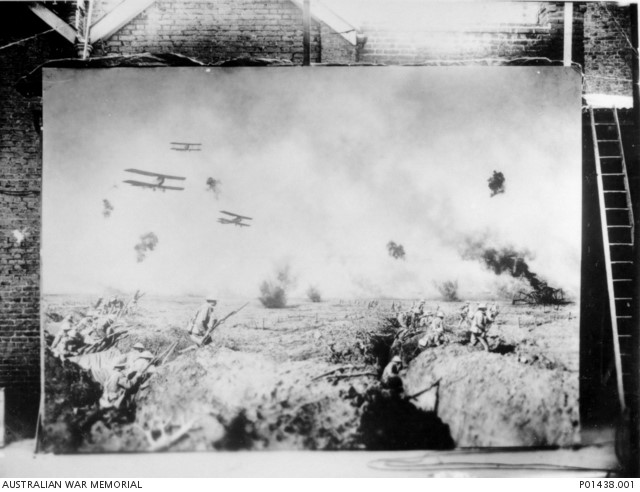
While cameras were prohibited among soldiers, for fear that they would fall into the hands of the enemy, many soldiers ignored this and created among them a vast wealth of photographs. This treasure trove of material culture was made possible by advances in technology, making cheaper and more portable cameras, such as the Kodak Vest Pocket Autographic Camera, which was advertised at the time as being ideal for soldiers, to ‘tell a more interesting and convincing story’ than a notebook or diary.[24] Photographs would be taken of the soldier’s experiences and shared with the family, either through letters or on their return. This very emotional connection was two way traffic, and many soldiers would carry photographs of loved ones with them.[25] Professor Catherine Moriarty, in her essay, ‘Though in a Picture Only’, which focuses on photographs being used as memorials on the domestic and private level, emphasises the ubiquity and importance of photography throughout the war.[26] It has been argued by Dr Sandy Callister that the use of these photographs by soldiers helped to reinforce the centrality of the familial unit as a support for those fighting at the Front.[27] Thousands upon thousands of photographs were taken over the course of the war, many of which have now been digitized, both by national museums and libraries, as well as international initiatives, such as Europeana 1914-1918,[28] which uses a mix of sources; photographs, diaries, letters, postcards, and films from archives and national museums, as well as donations and artifacts from the general public. These digital archives represent only a fraction of the photographs taken during the war, but add an incredible amount as sources to those looking back, and so the importance of photography as an ‘objective memory’, that truth and reality presented not through written accounts, but by the captured image, is an idea still held today.

THE BATTLE OF PASSCHENDAELE, JULY-NOVEMBER 1917 © IWM (Q 2986)
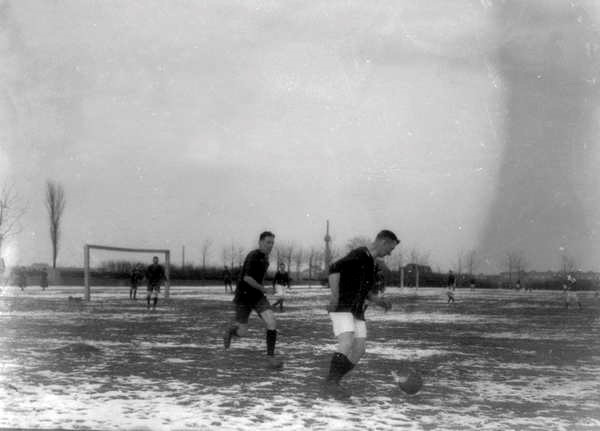
Soldiers would take photographs of the front and the trenches, but more pedestrian scenes were also photographed, like Father Browne’s photographs of football in the snow in 1919 (Fig.7). Father Brown, a Jesuit Chaplain, was attached to the Irish Guards from 1916 to 1919, and was an interesting figure, having won the Military cross, and the Belgian Croix de Guerre,[29] left a large collection of personal photographs, with images from the front lines, and behind the lines during the war, as well as images of occupied Germany postwar, and activities keeping the troops busy during demobilisation period.
Photography was not only used privately or for propaganda, but also for planning. During the war military strategists became increasingly reliant on the use of aerial photography, which was used to help with reconnaissance, terrain mapping and artillery range finding. Germany was ahead of the Entente Powers in their use of aerial photography, although the British Royal Flying Corps, established in 1912, had a school of photography early on in the conflict, with a centralised organisation of surveyors, attached to the Artillery battalions, who would use photogrammetry, the use of terrestrial and aerial photographs to measure distances when plotting a map, to create topographical maps in order to direct artillery fire.[30] By the end of the war all the belligerents on the Western Front had some form of aerial photography being used in conjunction with maps. But this bird’s eye view, however, presented a warping of reality all of its own. The problem for the official photographers, and foreign correspondents, was their inability to capture or articulate the vast scale and scope of the war, while for command the reliance on maps and aerial photographs meant that there was a disconnect between how the geography of the war was understood by planners, and how it was experienced by the troops on the ground.[31] The grand, sweeping plans of attack, so clean-cut on the map, broke down in the face of the broken landscape and machine gun fire.

THE BATTLE OF PASSCHENDAELE, JULY-NOVEMBER 1917 © IWM (Q 45507)
Photography was one of the most incredibly powerful and emotive tools used in the First World War, and what is left to us informs our understanding of the war to this day, for better or worse. While the power of the image was well known before the First World War, and was used to effect in the Crimean and US Civil Wars, its use by militaries and governments as a tool of war was a lesson learnt in the First World War. At the same time, the war saw the democratisation of the image-maker, as the rank-and-file began to take control of the image of war being sent home and being kept for posterity, the creation of the defining image of a conflict no longer only the purview of the commissioned artist, as it was for the cultural myth of previous wars. This leaves us now, with a greater understanding, and a clearer picture of what life was like for our ancestors, than at any time before it.
Bibliography
- Australian War Memorial https://www.awm.gov.au/collection/P01438.001
- Callister, Sandy. ‘Picturing Loss: Family, Photography and the Great War’ The Round Table 96 no. 393 (2007), pp. 663-678.
- Callister, Sandy. The Face of War: New Zealand’s Great War Photography. Auckland, 2008.
- Carmichael, Jane. The First World War Photographers. London, 1989.
- Chasseud, Peter. Mapping the First World War: The Great War through Maps from 1914 to 1918. Glasgow, 2013.
- Europeana 1914-1918 collection http://www.europeana1914-1918.eu/en
- Father Brown Collection http://www.fatherbrowne.com/The%20Collection/index.html
- Farish, Matthew. ‘Modern Witnesses: Foreign Correspondents, Geopolitical Vision and the First World War.’ Transactions of the Institute of British Geographers 26, No. 3 (2001), pp. 273-287.
- Horne, John. ‘Public Opinion and Politics’ in A Companion to World War I, edited by John Horne, pp. 279-294. Chicester, 2010.
- Imperial War Museum ‘Photography in the First World War’ http://www.iwm.org.uk/collections/item/object/205196677
- Imperial War Museum ‘Australian First World War Official Exchange Collection’ http://www.iwm.org.uk/collections/item/object/205193436
- Imperial War Museum ‘The German Withdrawal to the Hindenburg Line, March-April 1917’ http://www.iwm.org.uk/collections/item/object/205194692
- Imperial War Museum ‘The Battle of Passchendaele, July-November 1917’
- Imperial War Museum ‘The Hundred Days Offensive, August-November 1918’ http://www.iwm.org.uk/collections/item/object/205194706
- Jolly, Martyn. ‘Australian First World War photography Frank Hurley and Charles Bean’ History of Photography 23, No. 2 (1999), pp. 141-148.
- Jolly, Martyn. ‘Composite Propaganda Photography in the First World War’ History of Photography 27, No. 2 (2003), pp. 154-165.
- Moriarty, Catherine. ‘ ‘Though in a Picture Only’: Portrait Photography and the Commemoration of the First World War’ in Evidence, History and the Great War: Historians and the Impact of 1914-1918 edited by Gail Braybon, pp. 30-47. New York, 2003.
- O’Donnell E. E. ‘Photographer Extraordinary: The Life and Works of Father Browne’ Studies: An Irish Quarterly Review 79 no. 315 (1990), pp. 298-306.
- Roberts, Hillary. International Encyclopedia of the First World War ‘Photography’ http://encyclopedia.1914-1918-online.net/article/photography
- Wellington, Jennifer. ‘War and the Imperial Imaginary: Museums, exhibitions, and visual displays of the First World War in Britain, Canada, and Australia, 1914-1943’ (Unpublished PhD thesis, Yale University, 2013).
Footnotes
[1] Jane Carmichael, First World War Photographers. (New York, 1989), p. 3.
[2] Martyn Jolly, ‘Composite Propaganda Photographs during the First World War’ History of Photography 27 no. 2 (2003), p. 155.
[3] The materials collected by Charles Bean are referred to as such on the webpage for the Australian War Memorial’s exhibition ‘Forging a Nation’ https://www.awm.gov.au/exhibitions/forging/australians/bean/
[4] Jolly, ‘Composite Propaganda Photographs during the First World War’, p. 155.
[5] Hillary, Roberts, ‘Photography’ http://encyclopedia.1914-1918-online.net/article/photography accessed 6th December 2015
[6] Sandy Callister, The Face of War: New Zealand’s Great War Photographers (Auckland, 2013), p. 115.
[7] Jennifer Wellington, ‘War and the Imperial Imaginary: Museums, exhibitions, and visual displays of the First World War in Britain, Canada, and Australia, 1914-1943’, Yale University, 2013, p. 97.
[8] Frank Hurley, diary entry for 29 May 1918 in Dixon and Lee (eds), The Diaries of Frank Hurley cited in Wellington ‘War and the Imperial Imaginary’, p. 106.
[9] Jolly, ‘Composite Propaganda Photographs in the First World War’, p. 157.
[10] Matthew Farish, ‘Modern Witnesses: Foreign Correspondents, Geopolitical Vision and the First World War’ Transactions of the Institute of British Geographers 26, No. 3 (2001), p. 281.
[11] Wellington, ‘War and the Imperial Imaginary’, p. 99.
[12] Matthew Farish, ‘Modern Witnesses, p. 276.
[13] Carmichael, First World War Photographers, p. 30.
[14] Farish, ‘Modern Witnesses’, p. 285.
[15] Farish, ‘Modern Witnesses’, p. 280.
[16] John Horne, ‘Public Opinion and Politics’ in A Companion to World War I, ed. John Horne (Chichester, 2010), p. 281.
[17] Martyn Jolly, ‘Australian First World War Photography: Frank Hurley and Charles Bean’ History of Photography 23 no. 2 (1999) p. 144.
[18] Jolly, ‘Composite Propaganda Photographs and the First World War’, p. 156.
[19] Imperial War Museum, London (Photograph Archive): War Propaganda Bureau/Ministry of Information Wellington House Papers 1914 – 1919, unpublished letter from Ernest Brooks to Ivor Nicholson 12 December 1916, cited in Hilary Roberts, ‘Photography’ International Encyclopedia of the First World War.
[20] Wellington, ‘War and the Imperial Imaginary’, p. 109
[21] Carmichael, First World War Photographers, p. 60.
[22] Catherine Moriarty, ‘“Though in a Picture Only”: Photography and Commemoration’ in Evidence, History and the Great War: Historians and the Impact of 1914-1918 ed. Gail Braybon (New York, 2003), p. 38.
[23] Wellington, ‘War and the Imperial Imaginary’, p. 123.
[24] Callister, The Face of War, p. 28.
[25] Callister, The Face of War, p. 40.
[26] Moriarty, ‘Though in a Picture Only’, p. 35.
[27] Sandy Callister, ‘Picturing Loss: Family, photographs, and the Great War’ The Round Table 96 no. 393 (2007), p. 665.
[28]http://www.europeana1914-1918.eu/en a cultural heritage archive and website, co-funded by the European Union.
[29] E. E. O’Donnell, ‘Photographer Extraordinary: The Life and Work of Father Browne’ Studies: An Irish Quarterly Review’ 79, no. 315 (Autumn, 1990), p. 301.
[30] Peter Chasseud, Mapping the First World War: The Great War through Maps from 1914 to 1918, (Glasgow, 2013), p. 17.
[31] Farish, ‘Modern Witnesses’, p. 278.
 Historical Matters